Project Idea
Overview
‘HydroKnow’ is a Water Tank level indication system that links with the CFA to provide vital information on water availability in the case of a bushfire occurring nearby.
Essentially, how it would work, a sensor system is set up in the client’s water tank; this sensor collects information on how much water is available in the tank. It would also provide data such as the tank is full or getting too low etc., then display this on a mobile or web application.
The CFA could gain access to this information via an app login, and then in the case of a bushfire, emergency services can log in and look in that area, how much water is in water tanks, and then be able to plan where to draw water from in case they need it for their firefighting efforts.
Motivation
There are currently solutions to indicate tank water levels digitally, but not to the extent that the ‘HydroKnow’ concept does.
The ability for a customer to have a clear view of how much water is available in their water tank would be very helpful, especially during droughts and summer. This idea is significant as the innovative side is how the CFA can use this information to fight fires.
As Australians know, bushfires can rip through bushland, destroying homes, businesses and even lives in some cases. The CFA must have the water they need to fight fires. This software solution gives them an in-depth overview of what water they have at their disposal to fight fires, which would prove incredibly useful for a strategic and successful firefighting effort.“The 2019/2020 bushfire season was one of the worst in recent times, in the world” (Hughes, C 2021).
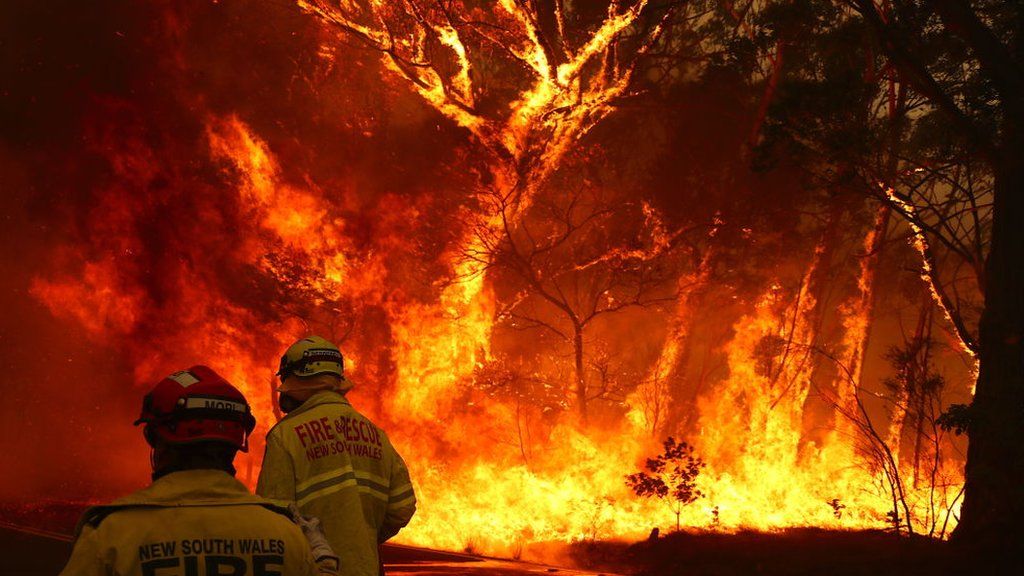
Source: https://www.bbc.com/news/business-50862349
According to Statistica.com, 4.3 million hectares of conservation land was burned in this bushfire season, with 13 million hectares burned in NSW and ACT, and an estimated 1.5 billion wildlife animals who lost their habitats in the fires dying across Australia. Bushfires are no joke, so the CFA must know what water is available to fill up their trucks and continue fighting fires.
Description
This software and hardware solution’s features would include:
- See up to date information on how much water is remaining in each water tank, presented in litres form as well as percentage capacity. (If multiple tanks are present on a property, the application will display separate information for each tank. There will also be an overview data set available of how much water is available in total on the property).
- A sensor placed within the tank to detect water levels that then connects to a transmitter mounted on the outside of the tank. It then connects to the internet (depending on if it's available) or contains 4G reception capabilities to transmit the data to servers, updating what’s displayed in the app.
- This water data is also accessible by the CFA, where in case of a bushfire, can see what water is available in the area and prepare a strategy for collecting it. They will be able to see who lives on the property, initiate an alert if they require the water, and communicate with the person/s dwelling on the property.
- This data can be accessed and presented in visually appealing graphs and text form on either a mobile or web application. The design goals are to present the information clearly, in an attractive and easy to read format.
- The customer can choose whether to keep a record of water levels in the tank and use this data to present trends of their water usage, with a ‘Tips’ feature recommending if they should try to change their water usage habits to save water.
- There would be a ‘Guides’ section on the application, giving all the necessary information required to set up and use the system and a troubleshooting guide in case of an error. Also included in this ‘Guides’ section, information would be available on the best actions to make in case of a fire situation. This would include things such as how to prepare and set up an evacuation plan with templates for how they would handle their possessions and other assets.
- This application could also have the potential to work together with state emergency apps in terms of guides and resources to help people best plan in case of a bushfire emergency and ensure the safety of themselves and their family/precious assets.
- There would be customer support available, too, with options to call over the phone, email or set up a video conference in case of an issue with the software or hardware.
- The transmitter and sensor would need to have a rugged design that ensures it will endure harsh Australian elements, being waterproof, dust-proof and UV resistant.
- Due to the nature of the data, including names and addresses, it would be necessary for the data traffic to be end-to-end encrypted to ensure that the data of the individuals using the service to be protected and only accessible by the correct parties.
Legalities
According to HB 230-2008, ‘Rainwater tanks are defined as structures and are to be classified ‘Class 10b’ as defined in the Building Code of Australia.’ In some area’s depending on if the network utility operator’s water supply is not available, there are specific requirements associated with supply of water for firefighting, unique to the area.
There are 3 main types of water tank: polyethylene tanks, metal tanks and concrete tanks which can be installed above ground, underground or subfloor.
Sizing of these are dependent on various factors including annual rainfall for the region, roof catchment size, water demand and if mains water is available on the property. Due to this, it’s important that HydroKnow is designed to work in any tank, regardless of shape or size. All penetrations into a tank are required to be sealed to minimise the risk of contamination, as a result of this, all components for this technology will need to be sealed, and any penetrations made sealed also, either with silicone or a dektite.
Marketing
When approaching a marketing strategy for HydroKnow, we need to assess not just the market for the product but also the way this product will help communities and in turn, the nation. There is certainly a market for HydroKnow and this is evident in the recent bushfires across Australia. The benefits of this product can save homes, land, animals, and more importantly, lives.
The demographic that HydroKnow will be focusing on is the adult population of all sexes. This type of demographic is more likely to become attracted to the implementation of this product and therefore support its entirety. By target advertising on social media and through other external social media channels, we can utilise those with high public profiles such as the Chief Officer of the CFA, Jason Hefferman and the CEO, Natalie MacDonald. By not targeting the typical social media influences, this well help reach and ensure audiences that this product is of serious nature.
By assessing realistic marketing strategies and goals, this will help save money overall on advertising costs and will not cheapen the brand. To distribute the brand and the product something like a fundraising gala and dinner will ensure that it reaches certain audiences. If commissioners, politicians, and someone like Celeste Barber (Australian Comedian) were to also carry the brand, it will only increase our brand and sales. During the last New South Wales and Victorian bushfire, Celeste Barber helped raise $51 million dollars on her social media accounts (McKinnell, 2020). By increasing audiences and the overall sales of HydroKnow, this will then increase the collection of data which will then increase the overall capabilities of this product. The benefit of compiling substantial amounts of data will ensure that if a bushfire were to occur, the users of HydroKnow have been able to distribute the pools of water on their property for the fire brigades to access from both land and sky perspectives.
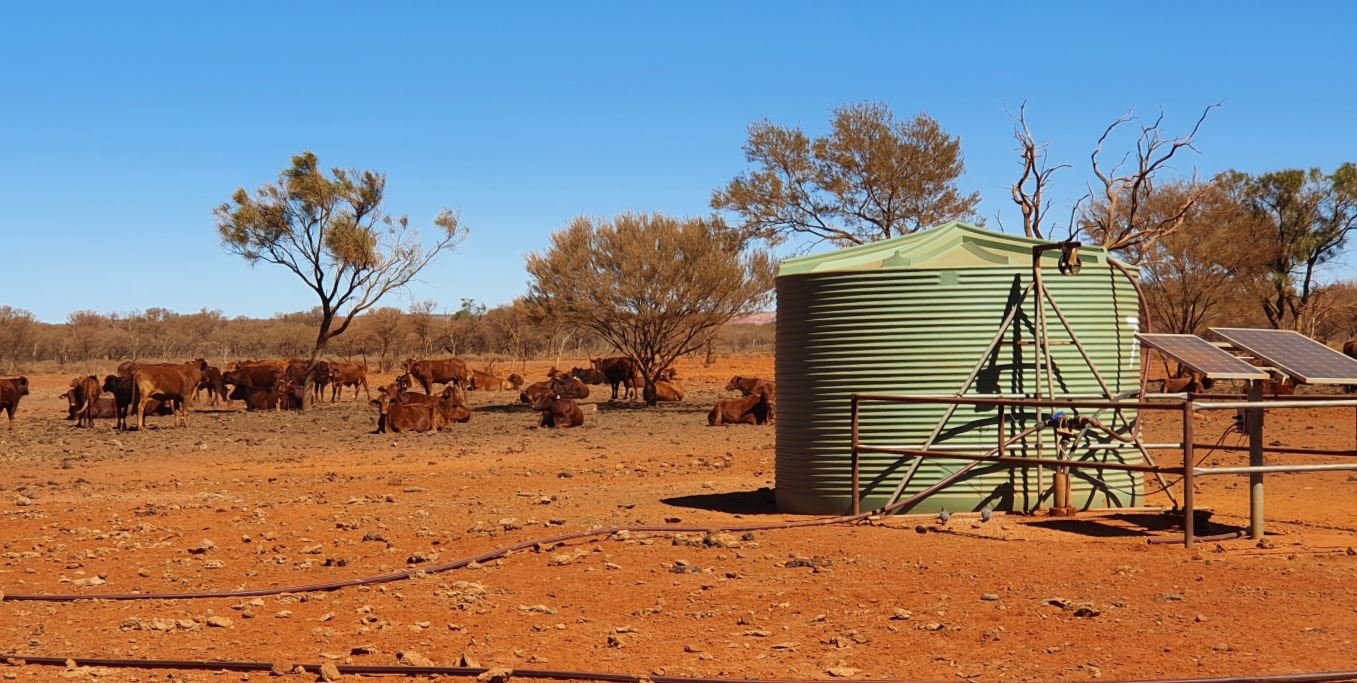
Source: https://agriculture.coerco.com.au/agriculture-blog
The HydroKnow data can also be utilised in an opposite environment scenario; in rural country Australia, many farmers are on the brink of a water crisis. If farmers had the ability to assess their water consumption and plan for a dry summer all by looking at their phone, this would be game changing! Farmers will be able to plan with their seeding, particularly those who primarily farm within greenhouse. If their tanks have ‘x’ amount of water and each week they consume ‘x’ amount, they will have the ability to foresee a water shortage before there is one.
In summary, the marketing for HydroKnow will purely be based on data collection, the public's opinion, and climate variability. These three components will steer the direction for the suitability of a marketing strategy.
How does HydroKnow compare to other solutions on the market?
The closest comparison we can make to a design already on the market exists within the invention of the “smartwater sensor” (Smartwater 2021). This design serves as an inspiration for how we will build our product, it has a high UV resistant casing and durable design to survive severe weather conditions. A solar panel option for water tanks stored in direct sunlight and a power supply built-in for indoor tanks. The app design also serves as a good steppingstone offering trending data for the user regarding water level and usage and has weather forecasting to predict the next rainfall.
For all the similarities, we would like to change some aspects and some areas of new development. One of the main differences between this product and our design is the sensor used; we would be implementing an ultrasonic water level sensor that would sit above the water's surface. We have chosen this option as ultrasonic sensors are typically very accurate with error readings of up to 0.1%, there is even long-range sensors that can reliably measure tall tanks up to 40m.
The other options of sensors include a float sensor, which cannot be used for remote sensing and requires the user to physically check the float, and pressure sensors which sit close to the bottom of a tank and measure the pressure distortion from the sensor to the surface of the water. However, these sensors require higher maintenance and usually suit open environments instead of an enclosed water tank (360 Tanks 2021). Using the ultrasonic sensor should also allow for longevity of the product by having minimal if any contact with the water. To further improve upon the smartwater sensor, we plan to embed cloud data storage into the design using 4G and Wi-Fi (if applicable).
Each user will be able to view their data, but this data would also be encrypted and securely stored within a cloud server that is only accessible by authorized CFA staff to utilise in the event of a bushfire or severe drought, allowing them to view water levels from numerous sources in one location.
But this data would also be encrypted and securely stored within a cloud server that is only accessible by authorised CFA staff to utilise in the event of a bushfire or severe drought allowing them to view water levels from numerous sources in one location.
Tools and Technology
Hardware - Tank Level Sensor and Processing
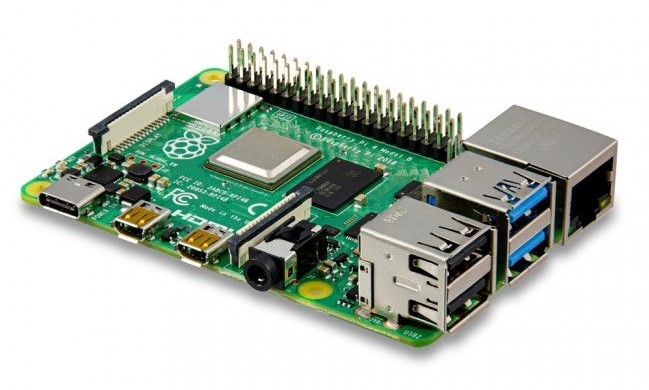
Raspberry Pi 4 Model B 4GB CE06425 Raspberry Pi Australia
The primary hardware is based around a Raspberry Pi 4, equipped with an ultrasonic sensor. This sensor technology is ideal due to the lack of moving parts that may malfunction over time, instead using solid-state ultrasonic transmitter and receiver to measure water levels. Testing for how this will work practically will commence in Assignment 3 once Will and Jarrad have received the Raspberry Pi's they have ordered and will begin experimenting with the best ways to use the ultrasonic sensors to gather the water level data.
Raspberry Pi Connectivity
Wi-Fi/ Ethernet: Basics models of HydroKnow will offer Wi-Fi/ ethernet connectivity, suiting smaller properties with a tank closer to their house and within network range. Raspberry Pi 4 hardware includes both connections as standard.
Cellular: Most users are expected to benefit from cellular connectivity which will be available by upgrade. Cellular connectivity is possible through commercially available Raspberry Pi modules and serviced through established telecommunication networks via customer account and SIM.
Low Power Wide Area Networking (LPWAN) technology is particularly suited to IoT sensors that don’t require a high data rate and offer advantages of low power consumption and cost (Pelaez 2017). Narrowband IoT (NB-IoT) is one such standard particularly suited to the HydroKnow use case. Modems such as the SIM7020E NB-IoT HAT for Raspberry Pi enables this connectivity on Raspberry Pi. Low data SIM plans suited to IoT implementation are also available that would suit HydroKnow implementation, such as Telstra IoT Data SIM plans.
Cloud Integration
Integrating the data flow between deployed HydroKnow devices and cloud based application servers can be facilitated through most major cloud service providers.
AWS and Google Cloud are 2 examples that offer subscription tools with specific functionality to manage IoT devices. Utilising these services simplifies the development and management of the project, and provide a scalable platform for further development. The Google Cloud IoT Core product is a cost-effective method to manage and scale the HydroKnow service by offering:
- Device management,
- End-to-end security and,
- Access control.
Application Development
The use-case of HydroKnow suits the user application to be supported on both mobile and desktop platforms. A robust mobile platform is a particular priority for CFA frontline responders, while CFA coordination agencies would benefit from desktop access to integrate with their fixed IT platform. Property owners would similarly have mixed-use, requiring mobile access for remote and convenient access, while when conducting administrative and analytical tasks may prefer a desktop solution.
Development of the mobile application would best be approached using a common programming language that can support both the iOS and Android platforms. C# (C Sharp) is an object-oriented programming language that can be used to develop on both platforms. The Xamarin framework allows developers to access native iOS and Android capabilities with C# (Chebbi 2021).
Due to the application’s requirement for accessing server hosted data, the backend functionality controlling it is a vital component. Research indicates this is the most complex technical component of a project of this nature (Dorogokupets 2020). Subscription-based Backend-as-a-Service (BaaS) tools that provide these functions would simplify the project, reducing both the development time and ongoing management overhead. In order to integrate with the proposed IoT cloud service provider in the example above, utilising Google's Firebase service would be a suitable option. These services facilitate functions such as:
- Data storage,
- Geolocation,
- Authentication,
- Push notifications and,
- User management.
Skills Required
By leveraging PaaS and BaaS tools, the project can focus on front-end development requirements. Competency would be required in multiple coding languages to develop the mobile and web applications, and to program the Raspberry Pi device.
Due to the networked nature of the service, an understanding of cybersecurity issues and strategies is important to effectively protect users, devices and data to ensure peace of mind for users and to comply with regulatory requirements.
With respect to hardware, experience using Raspberry Pis is required, while installing the equipment would need basic installation skills.
Industry data presented in this report suggest these skills are in strong demand, so the project is likely to face recruitment competition, if it is to scale, however these are fairly common skills within the IT industry.
Summary
Once this project is complete, it will provide a unique, innovative platform for clients and the CFA to see water tank level data presented in a clean, easy to read format! It would give the CFA vital information to help them plan firefighting efforts, contain guides and information for clients on how to best prepare for bushfires, and give them advice on what to do in an emergency. The impact of this application would be widespread across Australia and hopefully, become a standard installation with water tanks to equip and prepare Australians for bushfire seasons.
Brand Kit
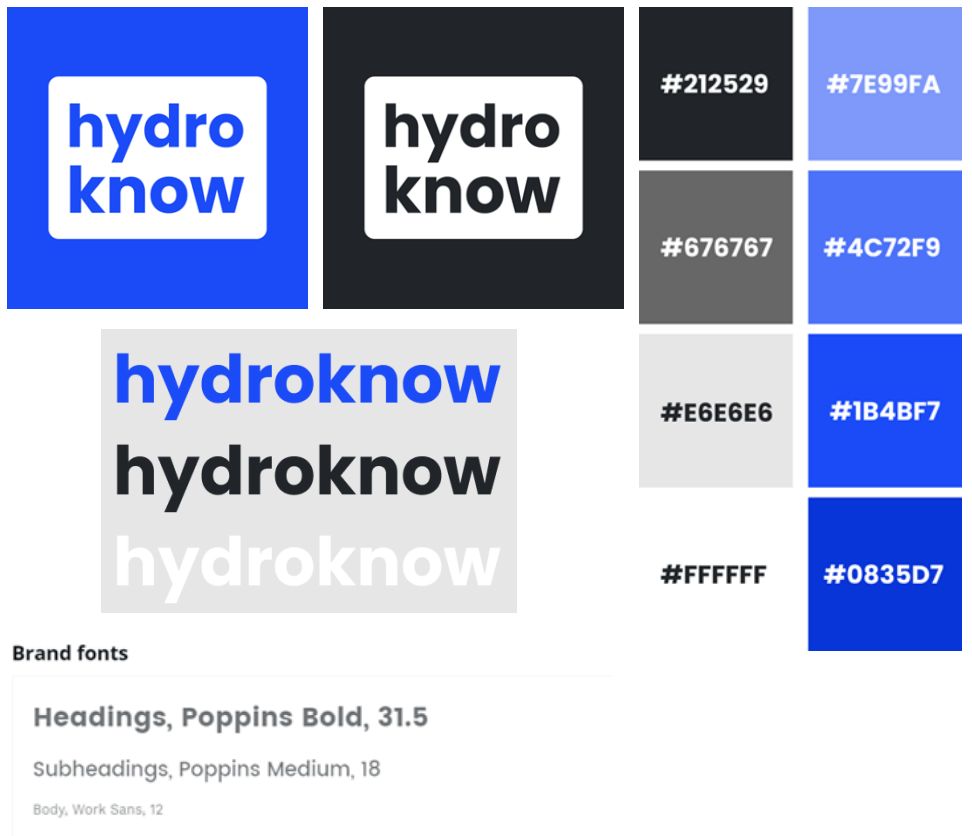
In preparation for Assignment 3, we've designed a brand kit concept for the branding and colours we would use as a guide on all 'HydroKnow' designs!